As part of the EMBL Entrepreneurial Minds series, organised by EMBLEM and EICAT, we welcomed Prof. Dr. Angela Relógio at EMBL Hamburg on 14 April 2026. Following the event, we spoke with her about her journey from circadian biology research at EMBL to co-founding TimeTeller®, a spin-off translating chronobiology into precision medicine.
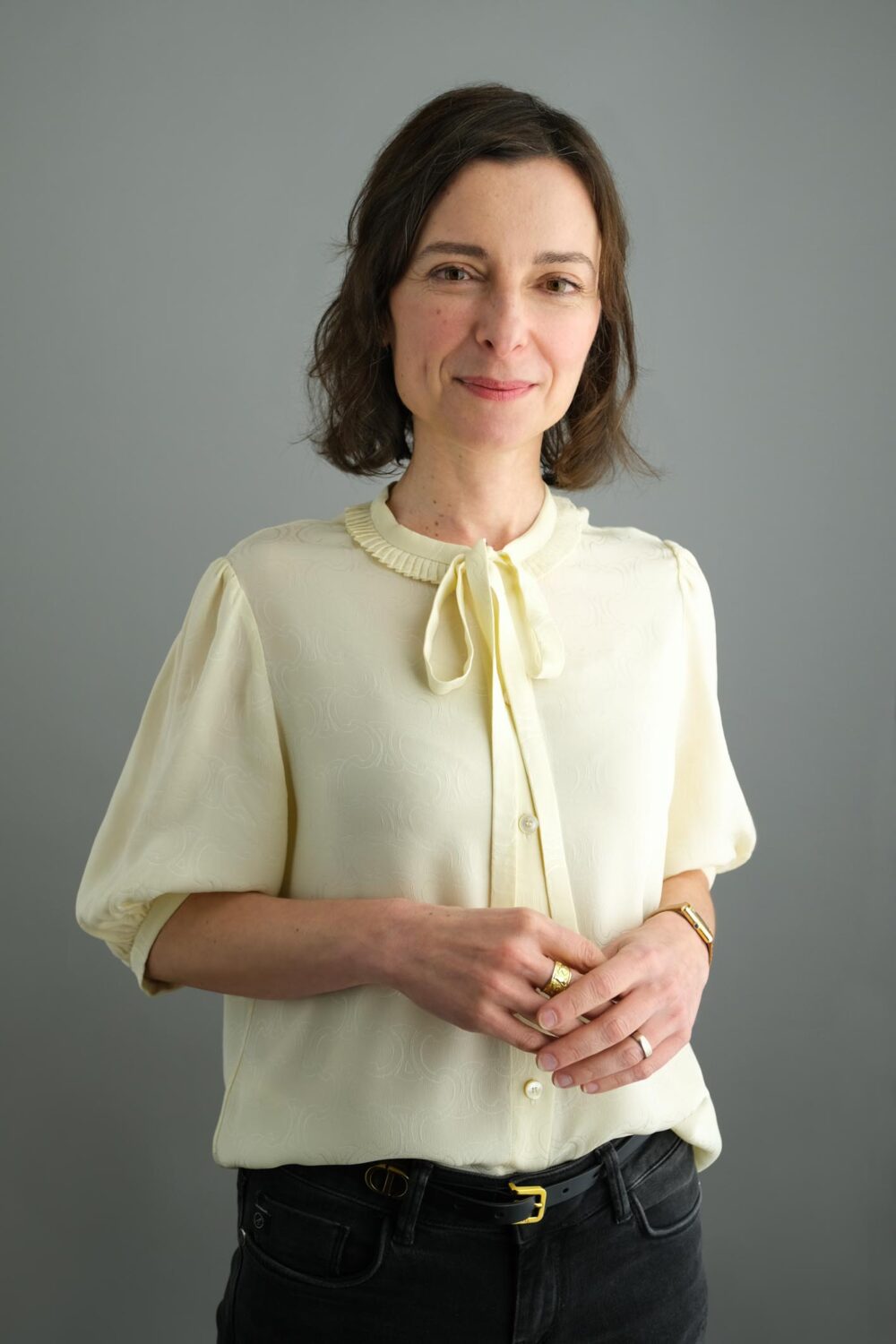
Prof. Dr. Angela Relógio is a systems biologist, entrepreneur, and Professor of Systems Medicine at the Medical School Hamburg (MSH). Her research focuses on circadian biology and systems medicine, particularly how biological rhythms influence disease development and treatment response, with a strong focus on cancer. She previously led research groups at EMBL Heidelberg and Charité – Universitätsmedizin Berlin, and holds a joint PhD from the University of Lisbon and EMBL.
Motivated by the link between biological timing and treatment efficacy, she co-founded TimeTeller® in 2023 to develop diagnostic tools enabling time-based, personalised medicine.
In this interview, she reflects on translating research into clinical innovation, building a startup, and shares advice for scientists exploring entrepreneurship.
- Your work sits at the interface of research and clinical application, could you briefly walk us through your career path?
I studied engineering at the Technical University of Lisbon, Portugal, where I was already exposed to oncology-related topics. Early on, I became interested in understanding cancer from a more fundamental, biological perspective, particularly through experimental work; which I had not yet experienced.
To gain that multidisciplinary and international exposure, I joined the European Molecular Biology Laboratory, where I had the amazing opportunity to work in the Gene Expression Unit on RNA splicing with Juan Valcárcel. My focus was always on cancer, specifically identifying splicing signatures in cancer cells using microarray technologies. At that time, I was involved in all aspects of the work; from experimental preparation to computational analysis.
After an initial fellowship from Portugal, I extended my time at EMBL and shifted to a different field -malaria- while to broaden my perspective while still applying my expertise in splicing and computational approaches related to data analysis.
I then moved to the Charité Universitätsmedizin Berlin as a postdoctoral researcher with my own funding. Later, I secured a grant from the German Ministry of Education and Research, which allowed me to establish my own group with a strong focus on integrating computational modeling, mathematics, and biology in oncology.
This is where I became particularly interested in circadian rhythms. At the time, the field was gaining momentum, and with my background in physics, oscillatory systems and molecular biology it felt like a natural direction. I decided to explore it further, and it has remained a central and fascinating part of my research ever since.
Today, I continue this work at the Medical School Hamburg, where we investigate how circadian biology can be leveraged to better understand and improve therapy of cancer and other diseases, as well as to drive health and performance.
- What motivated you to take your research beyond academia and move toward real-world applications?
I always had the desire to make an impact on people’s lives, that was one of the reasons I went into science in the first place. I found basic research incredibly exciting because I initially felt I didn’t yet have the knowledge to truly understand underlying mechanisms, so I focused on building that foundation.
Over time, however, I realised that basic research alone was not enough for me. I wanted to see my work translated into something tangible-something that could be used and ultimately benefit patients. It was never about financial gain; rather, it was about knowing that what I do can make a real difference, even if that simply means a patient can say, “I feel better.” On a personal level, I could not have pursued this path without my family. They are my foundation and constant support. Their presence gave me the confidence to take risks and move forward. I have navigated my career in a way that may differ from gendered expectations placed on women. For me, the goal was not to choose between family and work, but to find a balance that allowed me to remain fully committed to both.
- What were the key challenges in transforming your scientific work into a company or real-world solution?
One of the biggest challenges was realising that what seems simple in a scientific setting is not necessarily simple in practice. For example, even something as straightforward as asking people to provide a saliva sample turned out to be far more complex when dealing with real users-patients.
We had to continuously adapt, simplify processes, and learn by doing. A key lesson was to accept when something does not work and to be willing to change it rather than insisting on an initial idea.
Another major challenge was communication. As scientists, we are used to speaking with peers who understand our language. But when addressing non-specialists, it is essential to simplify without losing scientific credibility. Learning how to communicate effectively across audiences was critical.
- Are there specific attributes and qualities that you think have been helpful at different points?
Optimism and resilience have been essential. Many things do not work, grant applications fail, experiments fail, and of course you can feel down. But what matters is being able to bounce back, learn from it, and keep looking forward.
In science, uncertainty is part of the process. Even at the highest levels, success is never guaranteed. If you are uncomfortable with that lack of security, it can be difficult to pursue this path. For me, I accepted this early on, which helped me remain resilient and focused.
- Were there specific mentors, structures, or experiences that were particularly important in enabling this transition?
A mentoring programme at the Charité was very influential. It was designed to support female scientists aiming to establish their own groups, and it provided both guidance and a strong sense of community. The programme also connected me with key experts and ultimately helped me find my co-founder. Additionally, I benefited from mentorship on the business side-for example, advice to remain within the university environment for as long as possible, rather than moving too early into renting an external lab and taking on unnecessary financial risk.
My academic mentor encouraged me to build my lab independently, rather than embedding myself in an established group. That advice stayed with me, it was not an easy decision and required a great deal of reflection. When I later started my own lab, I began from scratch, with an empty room and minimal resources. Together with my first PhD students, we built everything up ourselves, and within a few months we were already generating results. That experience was both challenging and empowering. In hindsight, this decision proved invaluable and strongly shaped my entrepreneurial journey. You need a strong supportive network around you, people that can be there with guidance, expertise and support when things do not go so well, but also when things work and new big decisions are needed.
- What support did you receive from your institute (e.g. Charité) when founding your company, did it meet your needs? What kind of support you wished you had received (peers)? Are you still collaborating with Charité and if so in which capacity?
The support from Charité was crucial, particularly in the form of a substantial grant. It enabled us to carry out clinical studies, develop and distribute kits, and prepare for regulatory processes. It also allowed us to bring in expertise, including hiring people for regulatory and project management roles and developing a professional web platform.
At the same time, there were challenges. Working under strict time constraints—such as having only short time to use the grant—made it difficult to recruit the right people quickly enough to keep pace with the project’s development.
Today, my work continues to benefit from strong institutional support, also form the MSH Medical School Hamburg, including infrastructure and collaboration opportunities, which remain highly valuable.
- What are the biggest bottlenecks today in translating complex biological data into clinically actionable tools?
One key challenge is that what researchers find interesting is not always what is useful in practice. Translating scientific insights into something truly applicable requires constant iteration and feedback.
It is important to engage with others, gather perspectives, and remain open, but at the same time, you need to make decisions. Not every opinion can be incorporated and finding that balance is part of the process.
- Why is circadian timing so critical for understanding disease progression and treatment outcomes?
Our bodies operate in time. Many biological processes follow daily rhythms, and these rhythms are fundamental to how we function.
We have evolved internal clocks that allow us to adapt to the 24-hour cycle of our environment. Ignoring this dimension means overlooking a key aspect of biology. Time should be considered as an additional dimension-almost like a “fourth dimension”-in medicine and research.
- What are the main challenges in bringing circadian biology into routine clinical practice?
At present, circadian approaches are still largely limited to clinical studies or specific cases. To integrate them into routine care, more data is needed to demonstrate clear and consistent benefits.
Once the evidence becomes strong enough-particularly if it shows improved outcomes or survival-it will be difficult to ignore. However, implementing such approaches will also require changes in clinical routines, such as scheduling treatments at optimal times.
- If you could change one thing in how we currently approach medicine or biomedical research, what would it be; and why has it not changed yet?
Rather than changing a specific element, I would encourage greater openness. Too often, ideas are dismissed as “too complicated” without being fully explored.
A more open-minded approach would allow us to consider new possibilities more seriously and avoid prematurely limiting innovation.
- How do you see time-based medicine evolving over the next decade, and which areas of healthcare are likely to benefit most?
Oncology will likely be one of the first areas to benefit significantly, as patients often experience severe side effects and there is already substantial research in this field.
More broadly, I expect time-based approaches to extend into personalised medicine and even consumer health. Patients may increasingly seek to optimise their own health, making more informed decisions based on their biological rhythms.
- What do you enjoy most about your work, and where do you find the greatest sense of purpose?
I love the freedom, and the luxury, of being able to carry my research on something that I find interesting, and I value the feeling that I can contribute to making something better for people. That sense of purpose is what motivates me.
- What advice would you give to scientists aiming to translate their research into clinical or commercial impact?
I am generally cautious about giving advice, as what works for one person may not work for another. However, I believe it is important to work on something you genuinely care about and believe in.
Rather than focusing too much on long-term plans, it is more important to stay committed to what you find meaningful, that will keep you motivated, even when you find yourself at a trough of an oscillation, because you know that a peak will follow.
- Anything else you’d like to share with us?
Time matters.
We sincerely thank Angela for her inspiring talk and for the extra time she spent engaging with the audience. We also warmly thank EMBL Hamburg, Thomas Schneider, Margret Fischer, and Pedro Falcão for their support in making this seminar a success.